

Ever wondered what happens to your old phone, broken laptop, or outdated TV?
Most don’t realize it, but those everyday devices become electronic waste — or e-waste — and it’s one of the fastest-growing waste streams in the world.
E-waste includes items like smartphones, computers, tablets, monitors, printers, and televisions — basically anything with a plug, battery, or circuit board. And how we dispose of these items has a direct impact on our environment, public health, and natural resources.
Let’s break down why e-waste recycling matters — and what you can do.
What’s Really Inside Your Electronics?
Electronics contain a mix of valuable materials and dangerous ones.
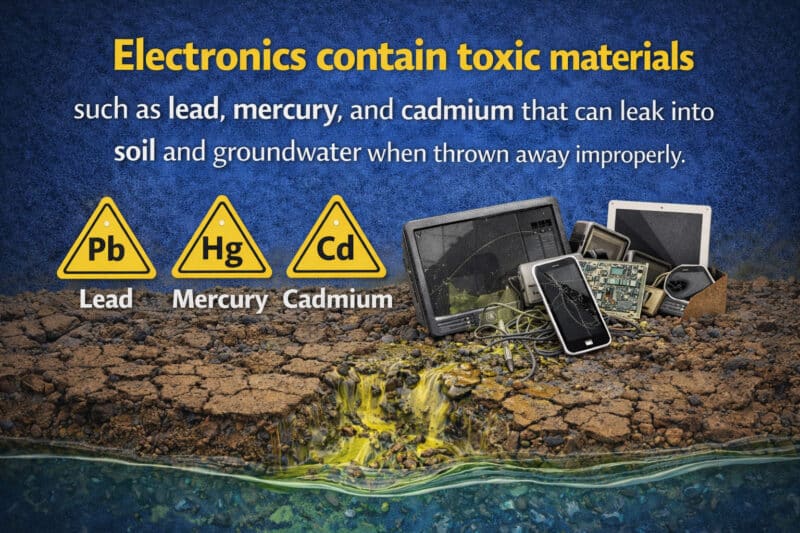
On the harmful side, many devices include toxic substances such as:
- Lead
- Mercury
- Cadmium
When electronics are thrown into landfills or illegally dumped, these chemicals can leach into soil and groundwater, contaminating drinking water supplies and harming ecosystems.
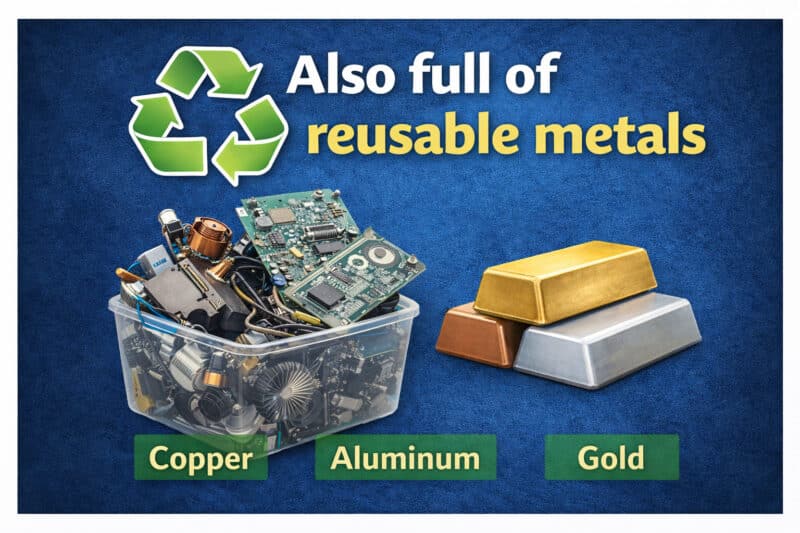
At the same time, electronics also contain recoverable materials like copper, aluminum, and even gold. When recycled properly, these metals can be reused — reducing the need for new mining and conserving natural resources.
In other words: your old devices are both a pollution risk and a resource opportunity.
Environmental Cost of Throwing Electronics Away
Improper e-waste disposal contributes to:
- Soil and groundwater contamination
- Increased greenhouse gas emissions
- Habitat destruction from mining new raw materials
- Human health risks, especially in vulnerable communities
According to the United States Environmental Protection Agency, responsible electronics recycling helps prevent toxic exposure while supporting a more circular economy — where materials are reused instead of discarded.
Recycling e-waste keeps hazardous substances out of landfills and puts valuable components back into productive use.
That’s a win for both people and the planet.
Many States Have E-Waste Recycling Laws
Because of these risks, many states now require electronics to be recycled rather than tossed in the trash.
But even if your state doesn’t mandate it yet, recycling e-waste is one of the easiest ways you can make a positive environmental impact.
Most communities offer free or low-cost options, including:
- Local recycling centers
- County drop-off locations
- Community collection events
- Municipal e-waste days
- Retailer take-back programs
These programs make it simple to dispose of electronics responsibly — often at no cost to you.
Upgrading Tech? Recycle The Old Stuff
Whether it’s upgrading your TV for the big game, replacing a laptop, or swapping out a phone, tech upgrades are common — especially during holidays and major events.
But every upgrade creates e-waste.
Before you set that old device aside or leave it on the curb, take a moment to find a recycling option near you. That small step prevents pollution, conserves resources, and protects future generations.
Bottom Line: Don’t Trash Your Tech
E-waste recycling isn’t complicated — but it’s incredibly important.
Every device you recycle:
✅ Keeps toxic materials out of soil and water
✅ Reduces demand for new mining
✅ Conserves valuable resources
✅ Supports healthier communities
Small actions really do add up to big change.
So the next time you replace an electronic device, remember:
Don’t trash your tech — recycle it.
Your planet will thank you.

Leave a Reply to John Jurgaitis Cancel reply