
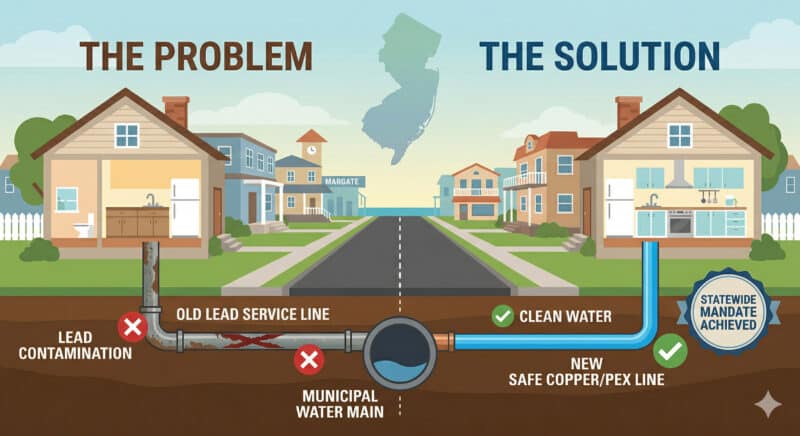
If you live in New Jersey, you might have noticed some recent buzz about the water pipes beneath our streets. Whether you are a homeowner, a real estate developer, or just someone trying to make healthier lifestyle choices, the quality of the water flowing into your home is a critical issue.
In 2021, New Jersey enacted the Lead Service Line Replacement (LSLR) Law, which requires all municipalities across the state to identify and replace service lines containing lead or galvanized material by 2031. Right here in our Downbeach community of Margate, the city has already launched its replacement program to tackle this statewide mandate head-on.
The Hidden Health Impacts
As a chemical engineer, I can tell you that there is no safe level of lead exposure. Lead can cause serious health problems if too much enters your body, potentially causing damage to the brain and kidneys. The greatest risk of lead exposure is to infants, young children, and pregnant women because developing fetuses and children absorb more lead into their bodies and are highly susceptible to its effects on brain development.
Pro Tip:
Hot water actually dissolves lead more quickly than cold water. If you need hot water for cooking or making baby formula, always draw water from the cold tap first and then heat it.
What Margate Residents Need to Know
Margate’s approach makes it incredibly easy for homeowners. All homeowners with service lines that are known to be lead or galvanized material, or have an unknown pipe material, are automatically enrolled in the city’s program. The best part? These inspections and replacements are performed at no direct cost to the homeowner.
You can check your property’s status, track inspections, and self-report your service line material by visiting the Margate Lead Service Line Inventory Hub.
All New Jersey Residents
While Margate is making great strides, this isn’t just a Downbeach issue—it’s a statewide mandate. Under New Jersey’s 2021 Lead Service Line Replacement Law, all public community water systems across the state are required to identify and replace lead and galvanized service lines by 2031.
If you live anywhere in New Jersey, here is how you can take action:
- Look Out for Mail Notices: You might receive a “Notice of Lead Service Line” or a “Notice of Unknown Service Line Material” in the mail from your water provider. If you receive one, read it carefully! By law, your water system must send these notices annually until the lines are officially verified as safe or completely replaced.
- Contact Your Local Provider: Check with your local municipality or water utility about their specific Lead Service Line Replacement program. Each New Jersey municipality will have resources available, and reaching out is the best way to find out how the replacement process works in your town and if you might be responsible for covering any replacement costs for the portion of the pipe on your private property.
- Test Your Own Pipes: If your water system hasn’t identified your line material, you can actually self-identify it! Locate your water meter (usually in the basement or outside) and find the pipe entering your home. If it’s metal, gently scratch the pipe near where it meets the wall with a coin or key, and hold a magnet to it. As a quick science lesson: lead is relatively soft, dull gray when scratched, and a magnet will not stick to it.
If you aren’t sure who your local water supplier is, you can check your latest water bill or use the NJ DEP’s publicly accessible database, Drinking Water Watch.
The Crucial Next Step: Why You Still Need a Filter
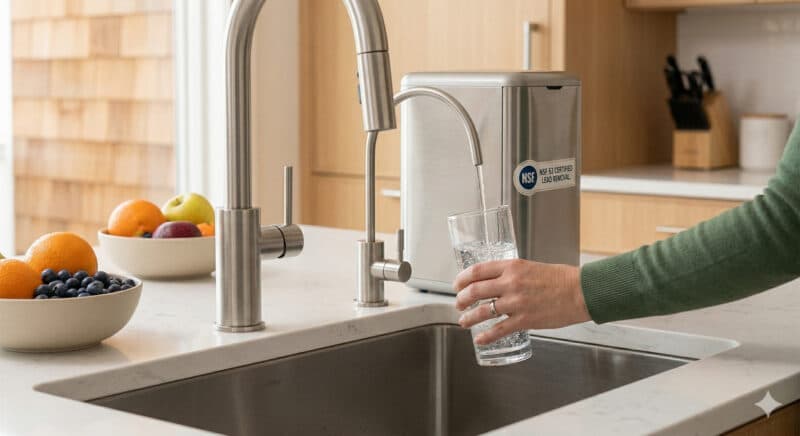
Replacing the municipal service lines is a massive victory for public health, but it doesn’t mean your tap water is instantly perfect. In fact, replacing a lead service line can temporarily increase lead levels by disrupting any remaining portion of lead pipe or redeposited lead in the scale of your home’s internal plumbing. And remember, boiling your water will not reduce lead!
Even after the main lines are replaced, older homes constructed prior to 1987 may still have interior lead solder or lead pipes. This is why I strongly recommend using a water filter during the six months following a line replacement, or even longer if there are confirmed or suspected lead-containing materials inside your home. A Point-of-Use (POU) water filtration system acts as your final barrier, ensuring the water flowing into your glass is truly safe and free of residual contaminants.
To make this transition easier for you, I’ve put on my chemical engineer hat and done the heavy lifting. I have personally picked out some highly effective, NSF-certified water filtration products that can be used right at the point of use to protect your family. You can check out my top recommendations and find the perfect fit for your home here: SustainableSherri’s Water Purification Picks.
Learn More & Take Action
Knowledge is power when it comes to the environment and your health. Check out these resources to stay informed:
- Margate’s Local Tracker: Margate LSLR Hub
- Statewide Details: NJ DEP Lead Service Line Requirements
- National Collaborative: LSLR Collaborative
Stay informed, check your pipes, and always filter your water. Together, we can build a greener, healthier community.


Leave a Reply